



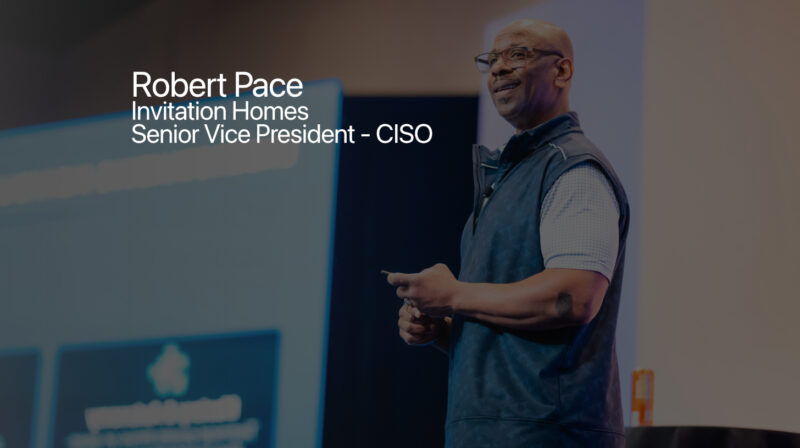
At a recent Innovate Cybersecurity Summit, Robert Pace, a newly appointed member of Innovate’s CISO Advisory Board, gave a talk on building high-performing security teams. His message to the room of security leaders was direct: the path that got them to their roles will not work for the people they are now developing.
Leaders Cut from a Different Cloth
Security leaders are already rock stars in their own realm, the talk began, but they came up through a different era. What worked for them will not carry younger team members to the same place, so leaders must adapt. They are also an example for everyone on their teams, regardless of their intent.
The Mental Toll of the Work
New hires should know what they are signing up for. Of all the careers available, they chose cyber, and it carries an emotional reality that other business functions do not. Nobody walks over to say the security was great today. Security professionals are the first to be called when something goes wrong and rarely the ones thanked when nothing does. Preparing talent for that, before it wears on them, is part of the leader’s job.
Ruthless Scope Control and Work Boundaries
Of everything on the agenda, controlling the scope of the team matters most. The practice is to meet vendors only on Fridays. Monday through Thursday is for getting the work done. The habit grew from an early-career moment when a team member walked out of a meeting to speak with a vendor, which prompted a reminder that vendors are trying to take the money while the team is trying to make it.
Physical Safety, Radical Clarity and Proactive Advocacy
Safety starts with whether people feel safe enough to talk to their leader, and whether the leader is talking to every member of the team. Staying close to the work means the leader periodically immersing themselves in projects rather than collecting tasks. The aim is to confirm that the message initially delivered during strategic planning meeting is the same one that reaches the frontline engineer several levels down on the project. As an active member of the project, this perspective can be most useful.
Feedback on meetings is part of this. Leaders should ask whether an agenda existed and encourage the “three Ps”: purpose, process, and product. The product element provides a direct point for the summary at the end, as it reaffirms what was initially outlined. Teams can also move away from the conventional “issue, impact, problem, action items” structure toward a simpler framework using the critical reflection model: What, So What, Now What. A junior engineer can present the “what,” expect the executive’s “so what,” and flow naturally into the “now what.” The framework makes it easier to tell a story, including when the leader is not in the room.
The goal is consistent rhythm. The image is a marching band. The saxophones and trumpets can take their solos, but the security leader is the bass drum at the back of the band, supplying cadence and consistency that keep everyone on track.
Radical clarity means holding the crucial conversation. In one case a team lead reported that a member was not carrying their load. From that moment the clock was running, and the leader had to decide whether to let it continue or act for the good of the team. The leader ultimately found the individual another place to work and told him that cyber was not for him. A leader’s word must be their bond with the team.
Proactive advocacy means protecting the team. When priorities shift elsewhere in the organization, changes should go through the proper process. Sometimes the team needs to see its leader take a stand, the way a basketball coach might get ejected from a game to show players he has their backs. That gesture should be used sparingly so political capital is not spent all at once, but where it is used, the team should see it.
Health, Vacation and Process
Team members are in control of their own health and should know what they need to do to recharge. The rule on time off is blunt: when someone is on vacation, they will not be called. If a problem comes up, it is discussed when they return, and the real finding is a missing process. Work that was not documented well enough to hand to someone else is a process failure, not an individual one.
That process thinking extends to decision-making. Data must become information, and only then can a management decision be made. It is a three-step sequence that leaders should look for throughout their organizations.
Assessing and Building Talent
To gauge how candidates and junior staff think, a useful exercise is a scenario with three rooms, and the candidate can decide which room to attend. The rooms are: a strategy session, a key project planning meeting, and an incident where everything has gone wrong. An entry-level engineer who chooses the strategy room may not be right for a frontline seat. However, the candidate who says they would try to cover all three, depending on timing, shows the kind of initiative worth noting. No answer is wrong, but the selections assist in revealing how the person thinks.
Team members should not stay forever. A leader’s obligation is closer to that of a college program, with freshmen, sophomores, juniors and seniors moving through and new recruits arriving. In this organization about 40% of the security team came from the service desk, another portion from the military, and the rest from outside, producing a mix in which everyone learns from everyone else.
Operational Velocity and the Year-End Showcase
Readiness is built on a yearly rhythm. Early in the year, the team holds a summit to align on objectives, and individuals carry that conversation into their one-on-ones. At the end of the year comes a showcase, where the leader invites their boss and says nothing while each team member presents their work.
The showcase is not a slide deck. It is an interactive dashboard, taking executives straight into the console. A first-year engineer gets rare face time with the CIO, CLO or CFO, and the executives see the work firsthand and become advocates, which helps the next budget request. The sessions meant to last 30 minutes routinely run 90.
Structured Forums and Intentional Leadership
Knowing the personalities on the team matters. After meetings, the leader goes around the room asking each person for their view, making sure the quiet voice and the most junior person get the floor. Leadership here is deliberate: if the leader does not intentionally do this action, it will not happen. It is the leader’s team and the leader’s brand, and every member should leave better than they when they arrived on the team. Leaders will not agree with every idea presented, and that is fine. The ability to collect perspectives is key, as that can assist in decision making. This process will no doubt be an item team members carry forward as they become leaders in the future.
Dedicated R&D, Cross-Training and Reading
The talk included a candid admission of a communication gap. A cultural reference to a Janet Jackson song was met with blank looks from younger engineers. It was a reminder that every leader eventually becomes “that guy” – using references from times in the past that no one has a clue about.
The experience led to assigned reading. The team read The Phoenix Project, part of a trilogy with The Goal and The Unicorn Project, which gave everyone a shared vocabulary for looking at operations from the catwalk down to the shop floor. Last year the team moved on to “The AI-Driven Leader” by Geoff Woods, to sharpen their prompting. The readings also feed into performance evaluations, turn into applied learning, and may put the team and its executives in the same book. It may sound old school, but it works.
Impact, Mastery and Purpose
Technical skill is not enough; people must be able to tell a story. The skills that carried today’s leaders upward, such as sitting silently in a mentor’s meeting, no longer translate to a generation that wants to speak, so leaders must adapt.
Teams should also be taught to measure outcomes rather than activities. Finishing a rollout is not the result. The result is reducing risk across the population by a defined amount. The more leaders develop professionally astute people, the better leaders they become. Their legacy as a leader is measured by the people they place across the industry, whether as another CISO, a COO, a teacher or a professor, and by what they do to improve the posture of the field.
A Little AI, Saved for the End
AI comes last deliberately, because today’s leaders reached their positions without it. It should make them better, not replace the fundamentals.
Two practical points stood out. First, during an incident, stick to the facts. Do not speculate or hand colleagues theories and meet the ask without going beyond it. In one case an engineer shared AI-assisted findings that left the team with more questions than answers. Second, an AI-generated output is not enough. Team members can share their prompt, because if a leader does not understand the prompt, they cannot trust the output. Throughout, the human factor remains the key.
The Takeaway
Building a high-performing team is a continuous effort that consumes most of a leader’s time. Leaders are no longer on the keyboard. They stand with their hands behind their backs, asking the right questions. The talk closed with a line worth carrying out of the room: secure the system by first protecting its humans.
Robert Pace
Robert Pace, a newly appointed member of Innovate’s CISO Advisory Board, has more than 35 years in the industry. He is current Vice President and CISO at Invitation Homes, First American Payment Systems and previously was at Dell Services, Bell Helicopter, Textron, Ameritech and PwC. He holds an MS from Walsh College, a BS from Michigan State, and credentials including CISSP, CISM and Six Sigma-Green Belt.
LinkedIn: https://www.linkedin.com/in/robert-pace097/